Breathe again
on Salzburg’s Sonnenterrasse
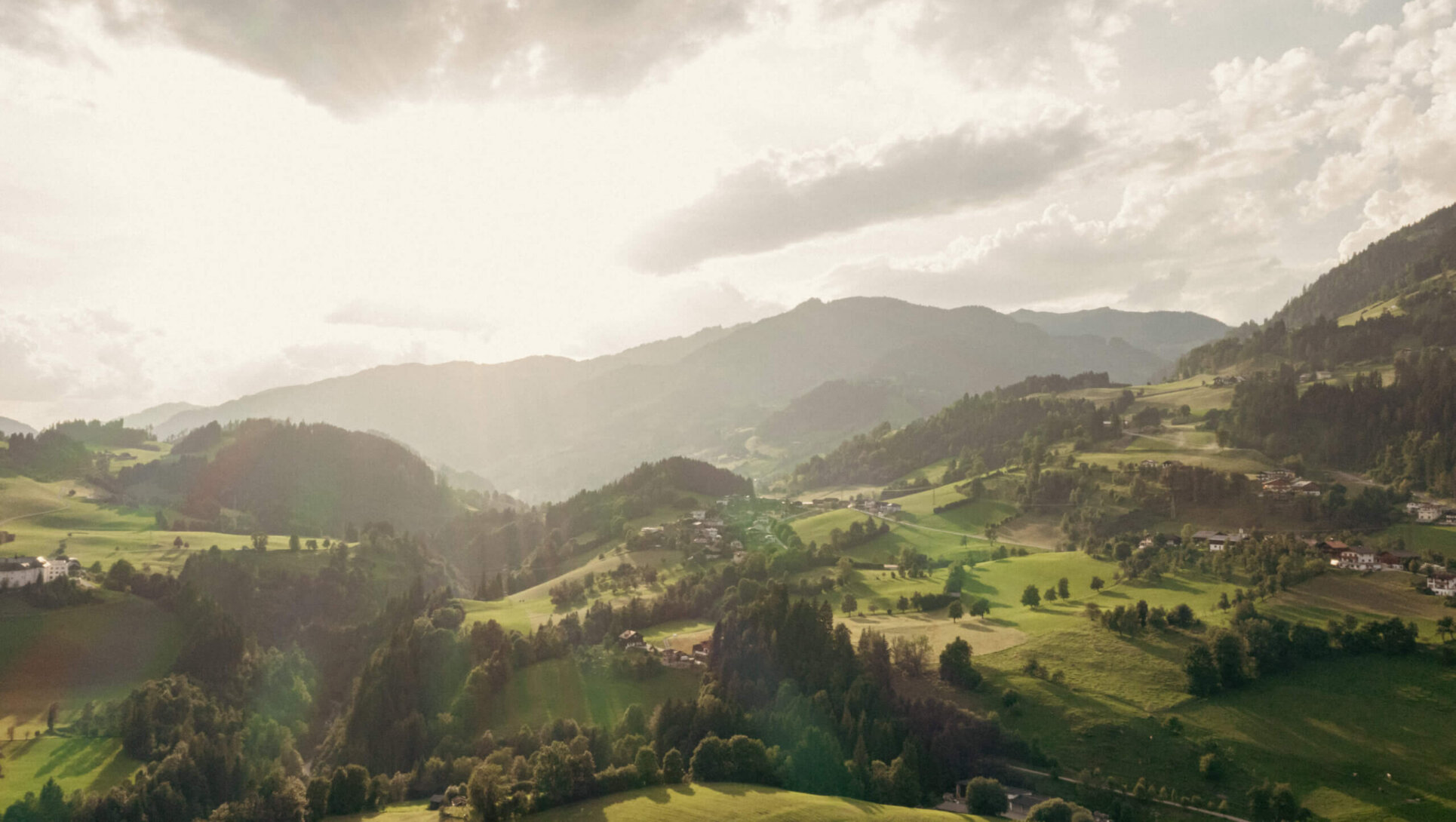
Did you know that the Salzburg’s Sonnenterrasse has an officially designated healing climate? In fact, the unique bioclimate of the climatic health resort St. Veit im Pongau is of great value.
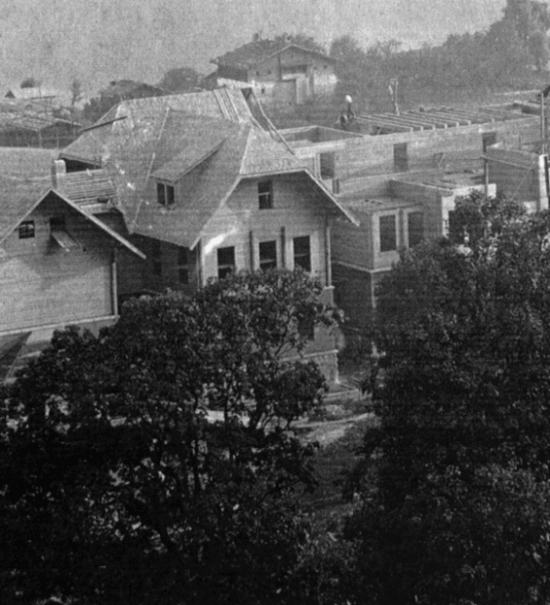
Book recuperationThe particularly beneficial and healing effects of the climate on Salzburg’s Sonnenterrasse were recognized at an early stage. It is therefore not surprising that a pulmonary sanatorium was built in St. Veit im Pongau during the time of Emperor Franz Joseph. St. Veit im Pongau thus became the first climatic health resort in the state of Salzburg.
For many years, it served the rehabilitation of patients with pulmonary diseases. The Austrian writer Thomas Bernhard stayed at the pulmonary sanatorium from 1949 to 1951; he later also occasionally spent holidays in the village. His novel “Die Kälte” was influenced by this experience.
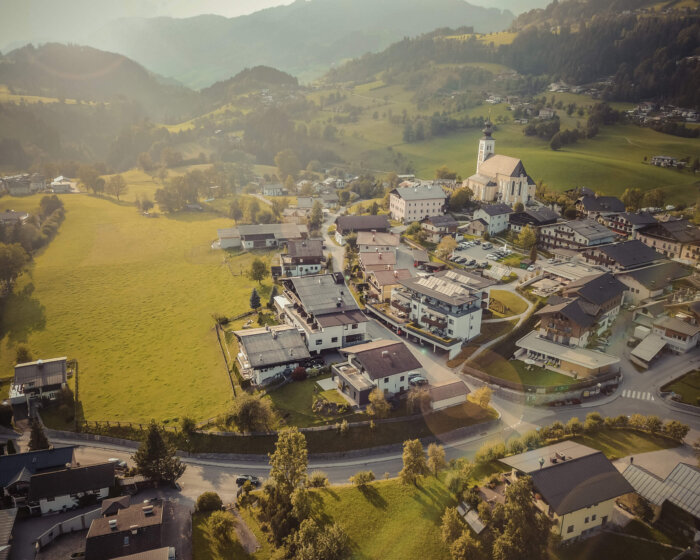
According to expert reports, the terraced location of the village center—around 200 meters above the Salzach River—is particularly beneficial, as it brings a distinct climatic advantage that has a positive effect on body and mind. Here, attenuated high-mountain climate stimulus factors combine with milder stimulating climate conditions as well as pronounced protective factors typical of a mid-mountain climate.
The result is gentle to mild actinic influences as well as mild to, in some cases, more pronounced thermal stimuli.
Here, the climate of the low-stimulus high mountain environment combines in an excellent way with the reduced stimulus factors and pronounced protective factors of the mid-mountain climate. Together, these create conditions that make a holiday in St. Veit, Schwarzach & Goldegg am See literally “invigorating,” with relaxation effects that last longer than in many other places.
From October to April there are more favourable sunshine, radiation and cloud cover conditions in St. Veit im Pongau than there are in lowland areas. For instance, the town has only a third of the fog frequency experienced in the city of Salzburg. This bias predominantly comes into effect in autumn and winter when in lower locations the flow-off of cold air results in longer lasting fog cover. Such persistent fog situations, as in the large valleys and in the Alpine foothills, are very rare. The somewhat shorter duration of sunshine, compared to the flatter regions in the province, as a result of cumulus clouds above the mountains between May and August, is of little consequence.
In St. Veit im Pongau strong contrasts in brightness and colour (for instance bright clouds on blue skies, sunlit inner forest areas, vibrant autumn landscapes), enhanced UV radiation and characteristic cumulus clouds above the mountains, have a stimulating effect.
St. Veit im Pongau’s location at between 750 and 2200 metres altitude is defined as being very favourable with regard to the climatic elements of air temperature and humidity. There are no extreme cold spells in the winter months, while in the summer, heat and mugginess are very rare. It seldom gets so hot during the daytime that you feel uncomfortable, which it sometimes can do, even when wearing appropriate clothing or reduce your activity. By searching for shaded areas or higher altitudes, the thermal load in the afternoon can be considerably reduced, even on very hot days. Night-time cooling, which is very important for recovery from heat stress, is ensured in St. Veit im Pongau, even in these times of advancing climate change. The absence of long periods of high relative humidity and the low frequency of winter inversion situations makes this location very suitable as a climatic health resort.
Due to the type of landscape in this climatic health resort area, there are no longer prolonged periods of stagnant air. Sunny, high pressure weather systems create a local wind system (mountain-valley-wind, slope winds), which reduces heat load as well as any gathering of stagnant cold air. On average, periods when there is absolutely no wind occur only around three percent of all hours. By the same token, high wind speeds are very rare in this climatic spa resort. Most of the time a pleasant, very gentle wind blows here. Due to its geographical location, there is no major Föhn wind in St. Veit im Pongau. On average there are around ten days of Föhn winds each year, of which around a half are in spring and a third in autumn.
In contrast to northern regions in the state, there is practically never any extreme orographic rain. Rainfall occurrence is low for an Alpine area. The distribution of rainfall reveals that even the highest probability of rainfall on summer evenings is only just over 20%.
